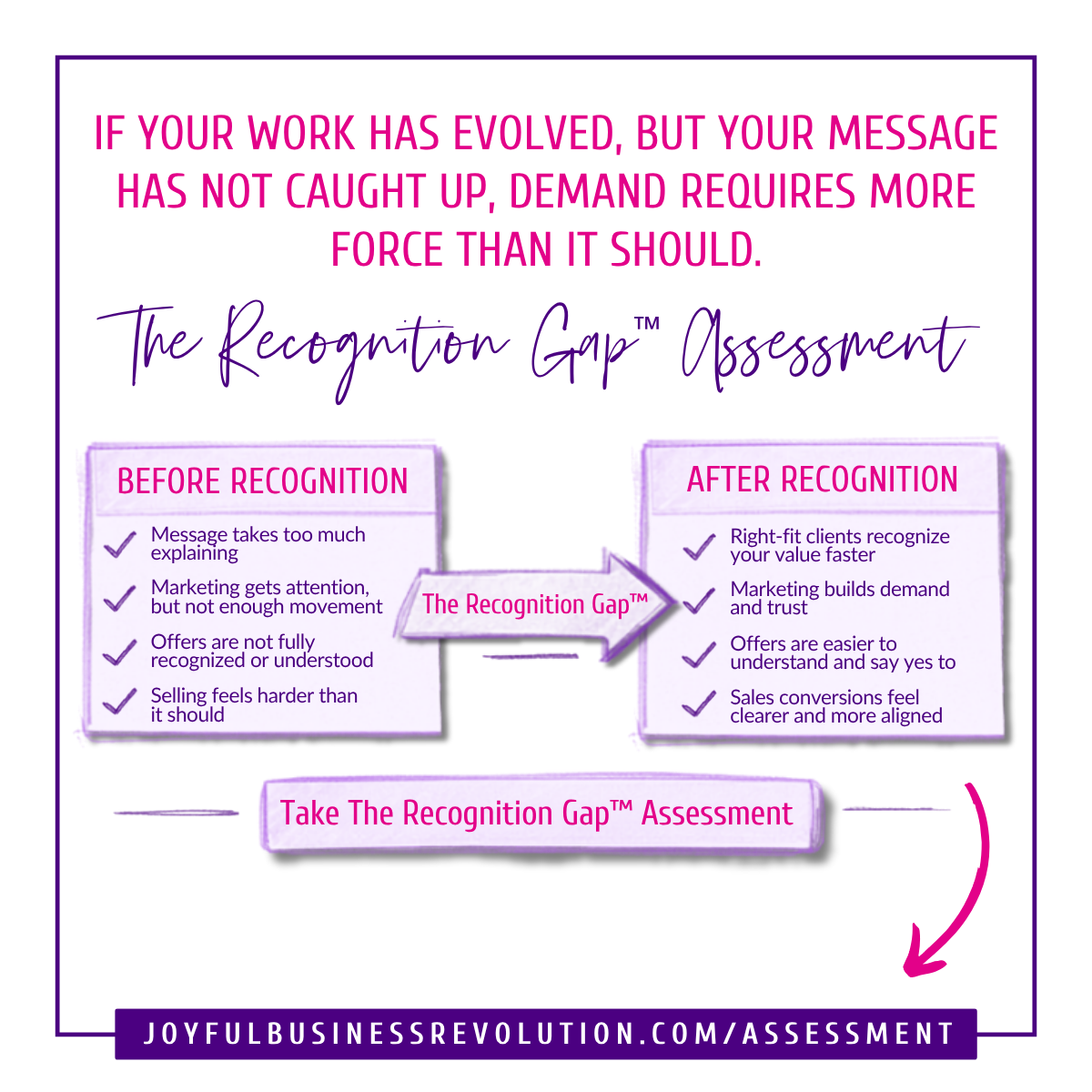
People can admire your ideas, agree with your philosophy, and feel inspired by your content without ever moving toward your work.
That gap appears when thought leadership and offers are treated as separate parts of the business. The public conversation lives in one place. The problems, decisions, and pathways inside the paid work live somewhere else.
Shannon and Amy discuss how to connect ideas to offers without turning every piece of content into a pitch. They examine why inspiration alone stalls momentum, how older bodies of work can still influence the business without leading the message, and what helps an audience recognize the problem your offer is built to solve.
Here are two takeaways from Season 11, Episode 7:
1. Inspiration is not the same as direction.
Inspirational ideas often receive enthusiastic agreement. People may comment, share, or tell you how much the message resonated. That response feels good, but mature audiences are also looking for guidance. They want to understand what the idea changes, what problem it helps them address, and what they should consider doing next.
Shannon uses *Practical Joy* as an example. Joy remains foundational to JBR, but leading only with joy once attracted people who were not ready for the strategic messaging and business work the company was best equipped to provide. The body of work still matters. It simply needs to be connected to the decisions, methods, and offers that represent the current business.
2. Thought leadership should help people recognize the real problem and their readiness.
Many messages name symptoms without diagnosing what is creating them. Low engagement, slow sales, a quiet launch, or a confusing website may all be visible symptoms, but an audience cannot choose the right support until the underlying problem becomes clearer.
Aligned thought leadership helps people move from recognition to decision. It names the problem the offer solves, reflects the worldview embodied by the service, and helps people identify whether they are ready for change. This does not require constant pitching. It requires a clear path. Shannon’s questions about a person’s 90-day goal and why that goal matters are examples of how a conversation can deepen recognition before any offer is introduced.
Resources from this episode:
- Download the Profit-Driven Messaging Ecosystem Guide: Use the guide to reconnect your thought leadership, body of work, and offers through a more coherent messaging structure. https://joyfulbusinessrevolution.com/profitmessaging
- Grab Shannon’s book, Practical Joy: The episode discusses how the principles in *Practical Joy* continue to shape the way JBR supports clients and builds a business that is not organized around constant grinding. https://practicaljoybook.com/