A deeply considered philosophy can sound impressive and still leave the reader unsure whether your work is for them.
This happens when the language begins inside your framework, process, or methodology instead of inside the lived experience of the person you want to reach. You understand the full architecture because you have spent years building it. Your audience is meeting it for the first time.
Shannon and Amy examine how to translate a worldview into language that connects belief to real decisions and outcomes. They discuss why sophisticated work often gets lost in translation, how process-centered copy creates confusion, and what makes a worldview useful rather than merely interesting.
Here are two takeaways from Season 11, Episode 4:
1. Your audience cannot begin where your framework begins.
Experts often live several steps ahead of the people they serve. They know the core principles, decision-making process, and internal logic behind the work. When that language is moved directly into public-facing copy, it can become conceptual and difficult to apply.
Shannon shares an example of a certification program whose messaging spoke to two different audiences without clearly naming either one. The copy also centered the creator’s teaching process rather than what participants would understand, receive, or be able to do afterward. The philosophy was sound. The translation was not. Before introducing the framework, the message needed to help each audience recognize its current situation and why the certification mattered to them.
2. A worldview earns trust when people can see it operating in real life.
Worldview content is not simply a statement of belief. It shows how that belief has shaped your choices, your interpretation of the market, and the way you lead your work.
Shannon reads a long-form story about rebuilding JBR after a million-dollar year, moving away from messaging that attracted the wrong clients, responding to the rise of AI, and returning to the work she believed she did best. The story works because it connects belief, lived experience, judgment, and action. Depth is welcome. Abstraction is the problem. The audience should leave with a clearer understanding of how your philosophy changes a real decision.
Resources from this episode:
- Read Shannon’s worldview post: The episode references “The Honest Story of How I Had to Revive My Business and Myself to Thrive Again” as an example of worldview, lived experience, and business judgment working together. https://www.facebook.com/maryshannon.hernandez/posts/pfbid0hdG5F9y5PHewvY1YcBvYczv9oBZRS2U3RvHdGu7f1AYp8CNLLeYuYhWqeXVejQEHl
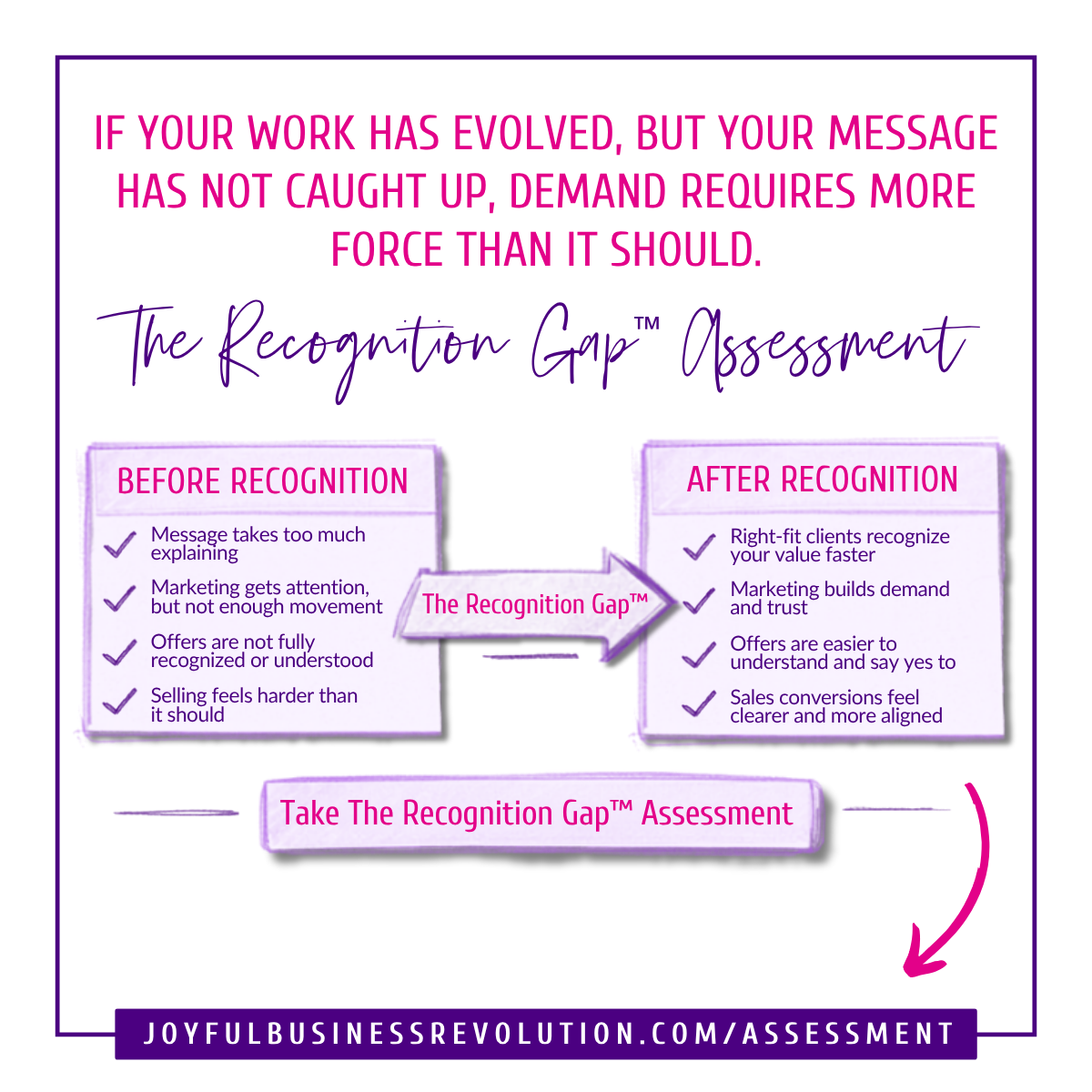
- Download the Recognition Gap™ Assessment: Bring greater coherence and structure to the body of work and thought leadership your message needs to carry. https://joyfulbusinessrevolution.com/assessment/