When a team member returns copy that feels nothing like the idea you gave them, the problem is not always their skill.
You may have carried the idea through weeks of observations, conversations, drafts, decisions, and quiet pattern recognition. They received the final sentence, the approved page, or the instruction to repurpose it. The context that made the idea clear to you never made the handoff.
Shannon and Amy discuss why strong thought leadership flattens when it moves from the expert’s mind into team execution. They examine a single word that disrupted a launch, a pricing philosophy that had never been explained to staff, and the shared language required to protect nuance as ideas move across a brand.
Here are two takeaways from Season 11, Episode 5:
1. Your team cannot translate context they never received.
Shannon shares how the word “founder” made a new offer difficult for even a close collaborator to refer. The offer itself was strong, but the audience label did not help people identify who belonged. When Shannon replaced it with specific roles such as consultants, strategists, trainers, and speakers, the offer immediately became easier to recognize and recommend.
Amy offers a second example: a business owner had told her team not to offer discounts but had never explained the pricing philosophy behind that decision. Without the reasoning, staff treated the rule as a number rather than an expression of the brand’s values. In both cases, the breakdown was not a lack of intelligence. The deeper thinking had not been translated into shared language.
2. A messaging playbook protects the sophistication of the work.
A traditional brand guide tells the team which colors, fonts, logos, and images to use. It does not necessarily explain what the business believes, how the founder makes decisions, which distinctions matter, or how the body of work should be communicated.
A brand messaging playbook gives the team a living reference for those choices. It allows people to create independently without producing work that sounds as though it came from an entirely different company. The playbook should continue changing as the thinking evolves. Its purpose is not to freeze the brand. It is to keep good ideas from becoming fragmented, generic, or diluted every time they move into a new format.
Resources from this episode:
- Connect with Shannon on LinkedIn: The episode invites listeners to continue the conversation with Shannon after listening. https://www.linkedin.com/in/mshannonhernandez/
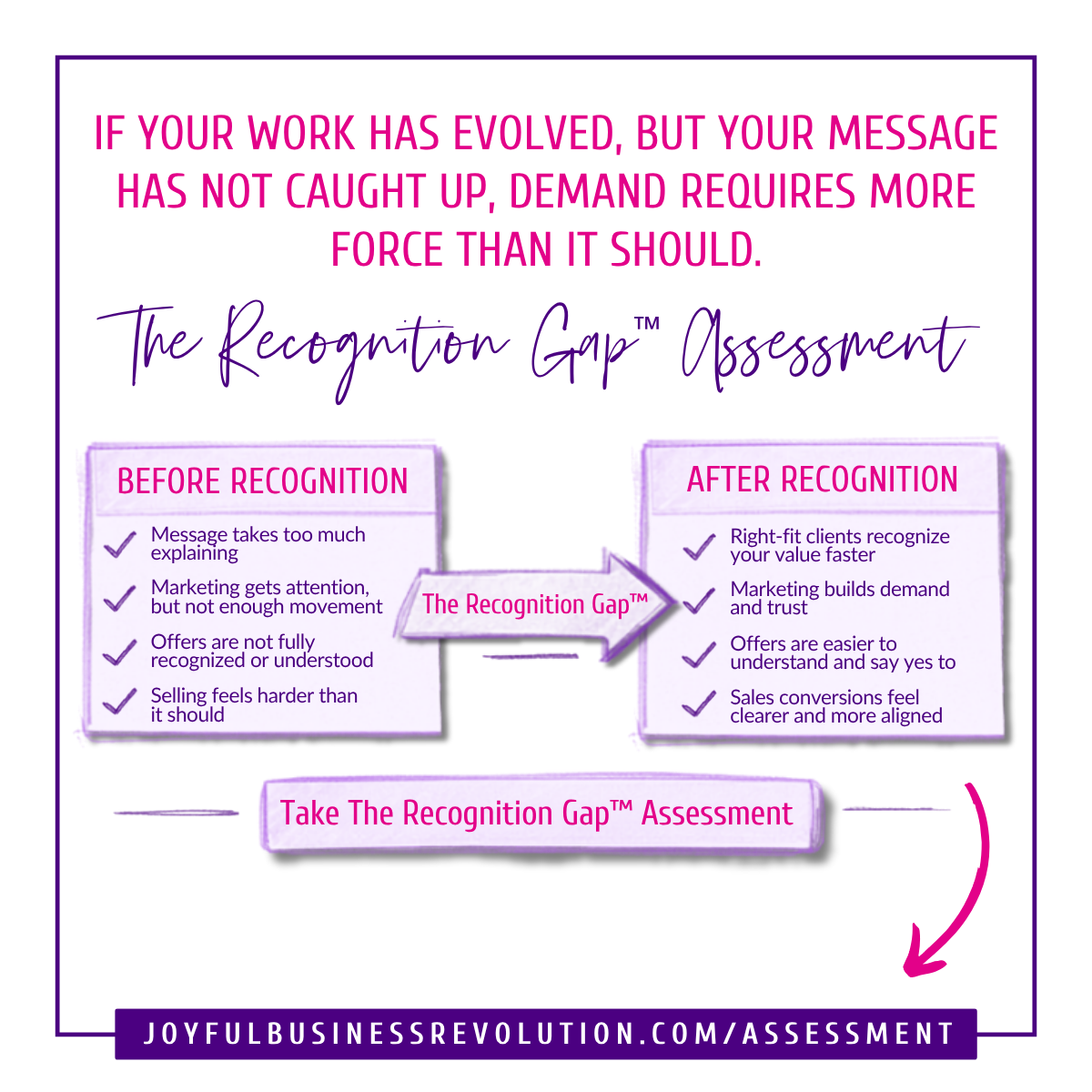
- Download the Recognition Gap™ Assessment: Bring greater coherence and structure to the body of work and thought leadership your message needs to carry. https://joyfulbusinessrevolution.com/assessment/