Posting used to feel natural. You knew what you believed, what you wanted to teach, and which ideas belonged at the center of your work. Then something shifted. The topics that once came easily began to feel repetitive, incomplete, or disconnected from the leader you have become.
It is easy to misread that resistance as inconsistency or a marketing problem. Sometimes it is neither. Your expertise, perspective, and identity may have evolved faster than the message carrying them.
Shannon and Amy open Season 11 by examining what happens when thought leadership still sounds like an earlier version of you. They discuss why old ideas can begin to feel too small, how AI has changed the context around messaging, and why mature leadership requires judgment, synthesis, and the willingness to let your message evolve.
Here are two takeaways from Season 11, Episode 1:
1. Resistance to creating content might be because of an identity shift.
When content suddenly becomes harder to write, the instinct is often to push harder, refresh an old post, find a sharper hook, or hire someone to reword the same idea. Those fixes may increase output, but they do not resolve the deeper disconnect when the thinking itself has changed.
Shannon describes resisting posts that would normally come easily, questioning what she believed, and feeling bored with ideas that had once helped thousands of people. The work had not become bad. It simply no longer reflected the full depth of her current perspective. That discomfort was not proof that something was broken. It was evidence that her leadership had evolved and the message needed to catch up.
2. Mature thought leadership is built on judgment, not constant proof.
Early in business, leaders often rely on teaching and proof to establish credibility. They explain what they know, demonstrate competence, and try to make every idea complete before sharing it. Mature audiences are looking for something different. They want discernment. They want to understand how you evaluate what is changing, what you have reconsidered, and how you arrived at your current point of view.
That may mean saying, “This was true for me then, but this is what I believe now.” It may also mean showing your work while an idea is still developing. Shannon and Amy describe this as operating from calm authority rather than completeness. You do not need every answer before you begin thinking with your audience.
Resources from this episode:
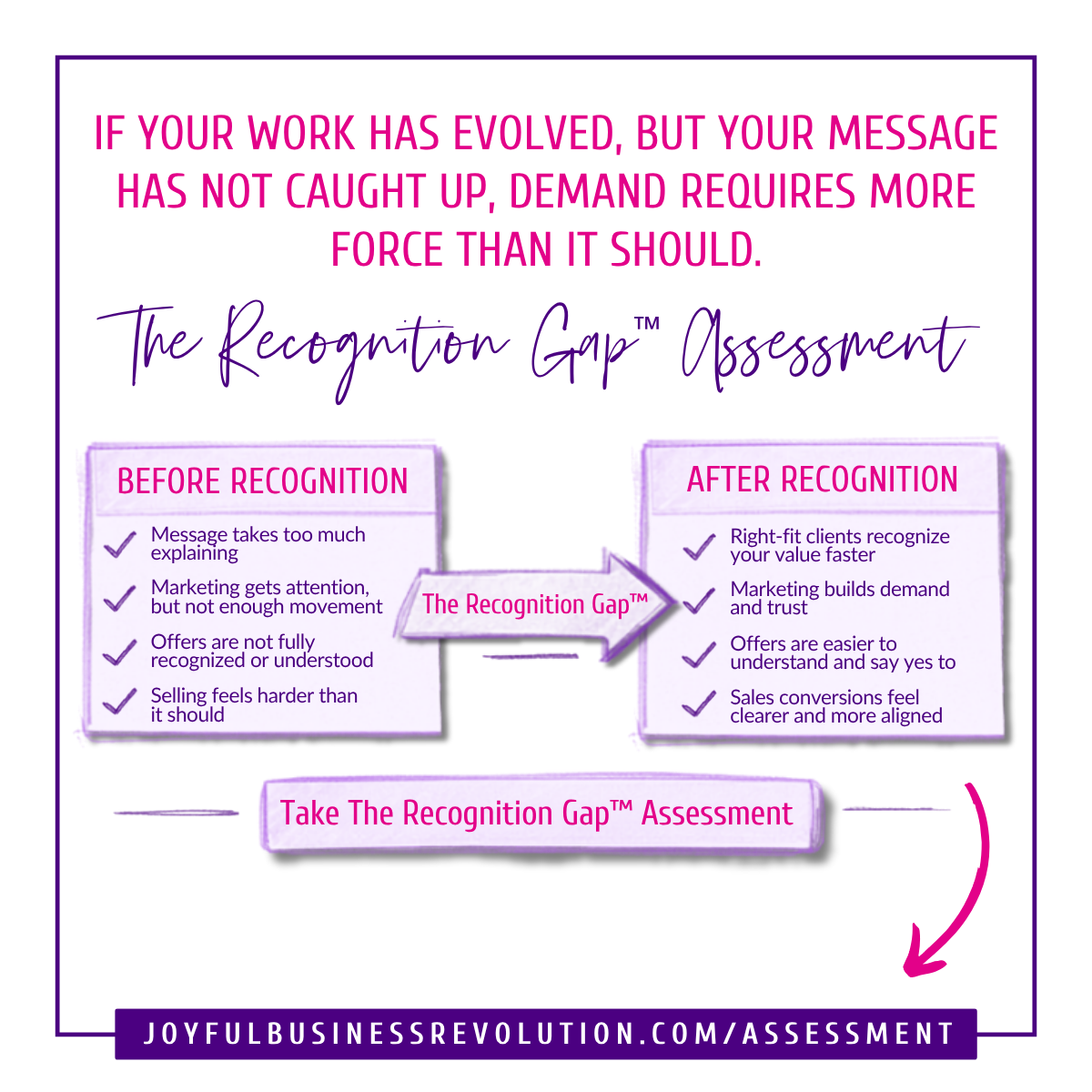
- Download the Recognition Gap™ Assessment: Bring greater coherence and structure to the body of work and thought leadership your message needs to carry.
https://joyfulbusinessrevolution.com/assessment/